Industry Knowledge
How ASTM A320 L7 Achieves Impact Toughness at Cryogenic Temperatures
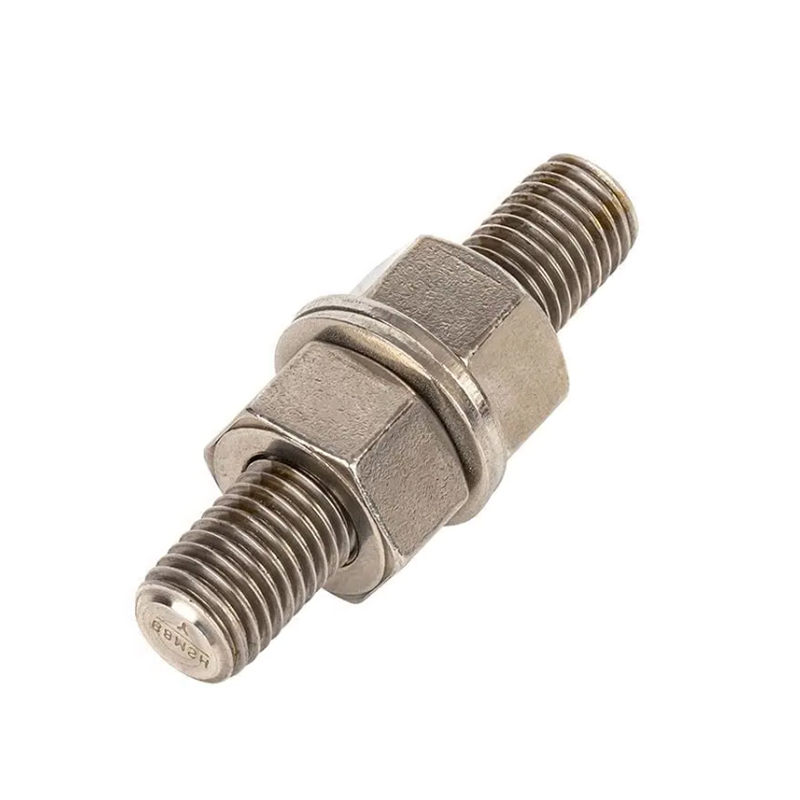
ASTM A320 L7 Threaded Rods are produced from the same chromium-molybdenum alloy steel (4140/4142) as ASTM A193 B7, yet the two grades are not interchangeable. The critical differentiator is a mandatory Charpy V-notch impact test that L7 must pass at −150°F (−101°C), with a minimum absorbed energy of 20 ft·lbf (27 J) averaged across three specimens, and no single specimen falling below 15 ft·lbf (20 J). This requirement does not exist in the A193 B7 specification at all — B7 rods are tested for tensile properties only, with no documented low-temperature toughness verification. In service at cryogenic temperatures, a B7 rod could fracture in a brittle manner under impact loading even while appearing to meet all hardness and tensile requirements, because ferritic-pearlitic and martensitic steels undergo a ductile-to-brittle transition as temperature drops.
Achieving consistent impact toughness in Cr-Mo steel at −150°F requires careful control of three metallurgical variables that are not simply a function of alloy chemistry:
- Austenitizing temperature and soak time: Insufficient austenitizing leaves undissolved carbides that act as crack initiation sites. The steel must be held at a temperature high enough to fully dissolve carbides into austenite before quenching — typically 1,550–1,650°F (843–899°C) for 4140.
- Tempering temperature: Higher tempering temperatures improve toughness by allowing carbon to redistribute from the martensite lattice into fine carbide precipitates, relieving internal stresses. For L7, tempering is generally performed at 1,100–1,200°F (593–649°C), which is higher than the minimum allowed for B7, deliberately trading a modest amount of tensile strength for improved ductility.
- Grain size control: Fine austenitic grain size directly correlates with improved low-temperature toughness. Additions of aluminum or niobium as grain refiners, combined with controlled rolling reductions before heat treatment, help suppress grain growth during austenitizing.
Shanghai Soverchancel Industrial Co., Ltd. supplies ASTM A320 L7 Threaded Rods with full Charpy impact test documentation, with each lot tested at the required −150°F condition by accredited laboratories, giving end-users the traceability necessary for pressure equipment compliance under ASME Section VIII and equivalent codes.
L7 vs. L7M vs. L43: Choosing the Right A320 Sub-Grade for Your Application
ASTM A320 encompasses several sub-grades beyond L7, and selecting the wrong one for a cryogenic application is a common procurement error that is difficult to catch during receiving inspection but potentially serious in service. The three most frequently specified sub-grades — L7, L7M, and L43 — differ in base material, strength level, and the lowest temperature at which impact testing is performed.
| Grade |
Base Material |
Min. Tensile Strength |
Min. Yield Strength |
Impact Test Temperature |
| L7 |
Cr-Mo (4140/4142) |
125 ksi (862 MPa) |
105 ksi (724 MPa) |
−150°F (−101°C) |
| L7M |
Cr-Mo (4140/4142) |
100 ksi (690 MPa) |
80 ksi (552 MPa) |
−150°F (−101°C) |
| L43 |
Ni-Cr-Mo (4340) |
125 ksi (862 MPa) |
105 ksi (724 MPa) |
−150°F (−101°C) |
ASTM A320 sub-grade comparison: L7, L7M, and L43
The practical difference between L7 and L7M is strength level, not chemistry. L7M uses the same 4140/4142 alloy but is tempered to a lower hardness (max 235 HBW vs. max 321 HBW for L7), yielding lower strength but greater ductility and reduced susceptibility to stress corrosion cracking in sour-service or hydrogen-sulfide environments. L7M is specifically called out in NACE MR0175 / ISO 15156 as acceptable for use in H₂S-containing oil and gas service where L7 is not, making the distinction critical in upstream and midstream pipeline applications.
L43 (4340 alloy) adds nickel to the Cr-Mo chemistry, which improves hardenability in large diameters and provides marginally better toughness at equivalent strength. It is typically preferred over L7 when rod diameters exceed 2½ inches and full cross-section mechanical properties must be demonstrated — the nickel content ensures deep hardenability that plain Cr-Mo cannot achieve in large sections even with aggressive quenching.
Thermal Contraction Effects on L7 Bolted Flange Assemblies at Cryogenic Operating Temperatures
One of the least-discussed engineering challenges in cryogenic bolted joint design is differential thermal contraction between the ASTM A320 L7 Threaded Rods and the flange body material. When an assembly cools from ambient installation temperature (approximately 70°F / 21°C) to operating conditions at liquid nitrogen or LNG temperatures (−250 to −320°F / −157 to −196°C), every component shrinks — but not by the same amount. If the flange is made from austenitic stainless steel (coefficient of thermal expansion approximately 9.9 × 10⁻⁶/°F) and the rods are Cr-Mo L7 (approximately 6.7 × 10⁻⁶/°F), the flange contracts more than the rods over the same temperature drop. The result is a net increase in bolt stress during cooldown — the opposite of what occurs in high-temperature service, where differential expansion tends to relax bolt load.
For a practical example: a 12-inch 300-lb flange assembly cooled from 70°F to −270°F undergoes a temperature delta of 340°F. Across a typical stud length of 8 inches, the austenitic stainless flange contracts approximately 0.027 inches more than the L7 rod. This additional elongation translates to an increase in bolt stress of roughly 13–18 ksi depending on rod diameter and modulus, pushing the assembly closer to yield if the initial bolt-up stress was already near the recommended 50–65% of yield used in most cold-service torquing procedures.
Design practices that mitigate this risk include:
- Reducing initial bolt-up stress: Targeting 40–50% of yield at ambient installation rather than the 65% commonly used in ambient-temperature service, leaving margin for the additional stress added during cooldown.
- Matching flange and rod materials: Specifying stainless or austenitic alloy rods (ASTM A320 B8M / Grade 8M) when the flange is austenitic stainless minimizes the differential contraction mismatch, though the lower strength of austenitic grades may require larger diameters.
- Using belleville washers: Spring-loaded disc washers under the nut act as a compliance element, absorbing dimensional changes in the joint stack and maintaining a more consistent clamp load through temperature cycling.
- Re-torquing after first cooldown: In non-insulated or accessible joints, re-torquing after the first thermal cycle to operating temperature verifies and resets the clamp load to the target value.
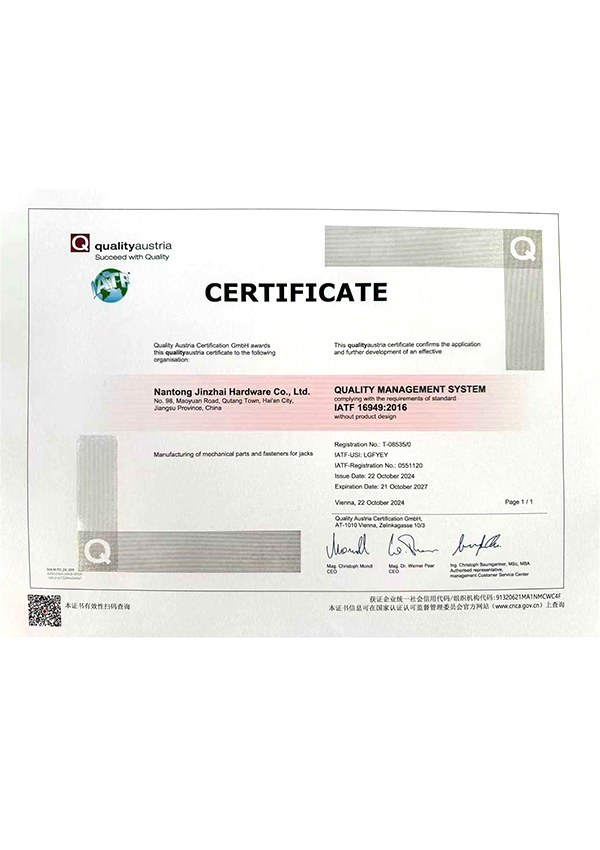
Nantong Jinzhai Hardware Co., Ltd., operating under Shanghai Soverchannel Industrial Co., Ltd., produces ASTM A320 L7 Threaded Rods to tight dimensional tolerances and provides customers with material certifications that include actual measured mechanical properties — data that is indispensable for the stress calculations underpinning cold-service joint design.
Storage, Handling, and Preservation Practices for L7 Rods Prior to Cold-Service Installation
ASTM A320 L7 Threaded Rods destined for cryogenic service are frequently damaged or compromised before they ever reach the flange — through improper storage, mechanical handling damage, or contamination during transit. Unlike ambient-service fasteners where minor surface rust or handling marks are often acceptable, cryogenic-service rods demand stricter preservation protocols because surface defects that would be benign at room temperature can serve as stress concentration sites where brittle fracture initiates under the combined effect of low temperature and high bolt stress.
Thread Protection During Storage and Transit
Threads on high-strength L7 rods should be protected with plastic end caps or thread protector tape from the time of manufacture through to installation. Bare threads left exposed in a warehouse environment accumulate corrosion products that alter the effective thread friction coefficient — a direct problem for any installation procedure that uses torque as a proxy for clamp load. Even light rust in thread flanks can shift the torque-tension K-factor by 15–25%, meaning a correctly torqued rod delivers significantly less clamp load than expected. Thread protectors also prevent mechanical dings and nicks that raise local stress concentrations in the thread root, where the rod cross-section is already at its minimum.
Coating Compatibility with Cryogenic Temperatures
Not all corrosion protection coatings remain functional or dimensionally stable at cryogenic temperatures. Zinc-rich organic coatings and some epoxy-based primers embrittle below −100°F and can crack or delaminate during thermal shock when the assembly is first cooled to operating temperature, generating debris that contaminates the process fluid. For L7 rods in LNG or liquid nitrogen service, the preferred options are bare (uncoated) rods stored in controlled humidity environments, light oil-film coatings that are removed immediately before installation, or thin inorganic zinc silicate coatings verified for low-temperature performance. PTFE dry-film lubricants are commonly applied to the thread and nut bearing face specifically to provide consistent lubrication at low temperatures where oil-based lubricants may congeal.
As a manufacturer specializing in precision fastening solutions for demanding industrial environments, Shanghai Soverchannel Industrial Co., Ltd. can supply ASTM A320 L7 Threaded Rods with customer-specified surface treatments, packaging configurations, and preservation coatings validated for cryogenic service — ensuring that the rods arrive at the job site in exactly the condition needed for compliant installation.